
Project meetings and conference attendances
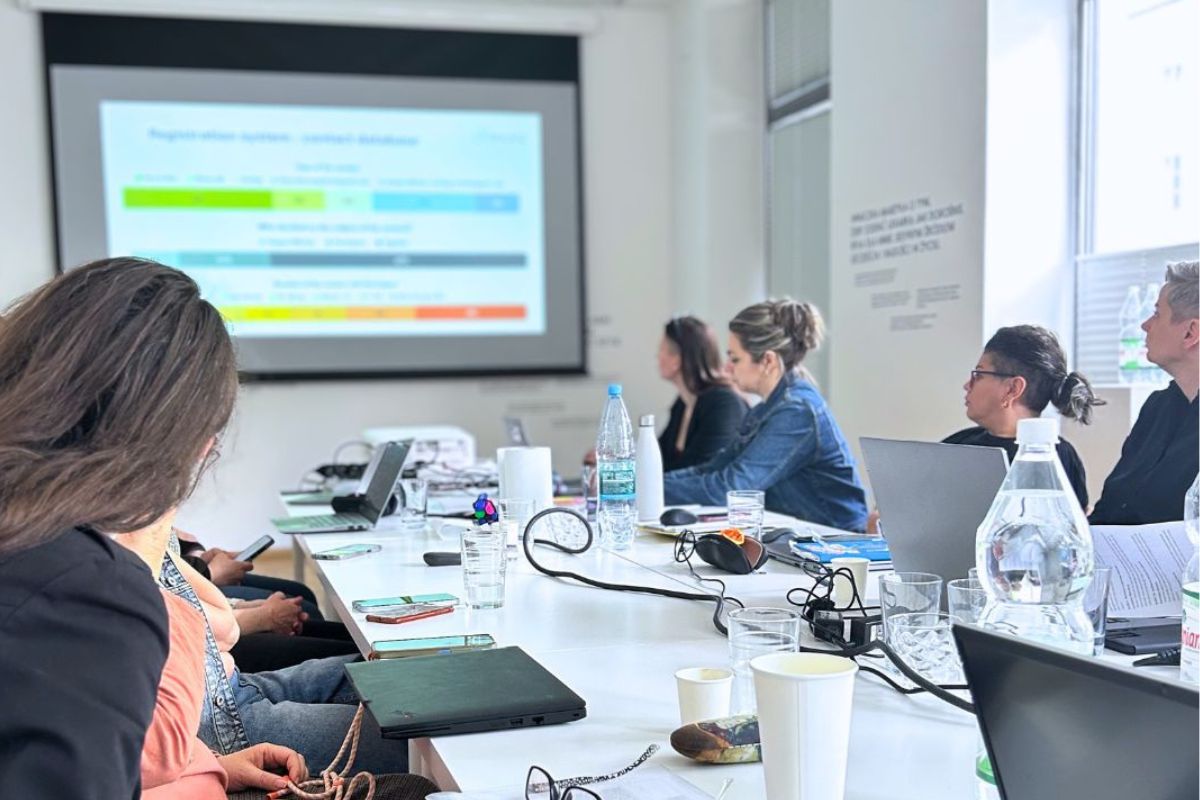
We visited Warsaw as part of the SOLACE-CEE project in May (2026. 05. 18-21.)
Marking the project’s halftime, SOLACE-CEE partners gathered in Warsaw for a three-day meeting, which followed a successful study visit at the FEANTSA FORUM 2026. In addition to welcoming Alena Vachnová as the new Innovation Team leader, our institute presented the interim monitoring results. Highlights were a significant growth in partner capacity over the past year, and growth in client coverage. While local pilots—from shelter telemedicine to regional HUBs—are progressing well, organizations still face systemic challenges such as staff shortages and rigid service delivery due to funding regulations. Moving forward, the focus will shift from setting up the services toward peer-to-peer knowledge sharing and integration with housing service components at all pilots.
Events
Participation in International Conferences
In the past months, two conferences were attended, where the results of the SOLACE-CEE project’s needs assessment were also presented:
- 20th European Research Conference on Homelessness, 24–25 September 2026, Lisbon, Portugal: Eszter Somogyi (co-authors: Nóra Teller and Noémi Vajdovich), HU: Health Literacy Among Households Experiencing Homelessness – Lessons Learned from the 2025 Needs Assessment of the SOLACE-CEE Project
The 2025 SOLACE-CEE project research component by Eszter Somogyi, Nóra Teller, and Noémi Vajdovich across five Central and Eastern European countries, in cooperation with all pilot project partners, revealed that limited health literacy among homeless households severely hinders disease prevention and timely care. Based on 265 client questionnaires and stakeholder interviews, the study highlights that individuals often struggle with medical instructions, distrust public services, and rely almost exclusively on emergency care, with unsheltered women having particularly low awareness of gynecological care. We concluded that in order to address this challenge, healthcare must shift from reactive emergency treatment to long-term prevention using integrated social and medical services, accessible communication, and direct, trust-building outreach.
- 65th ERSA Congress, 25–28 August 2026, Sofia University “St. Kliment Ohridski”, Sofia, Bulgaria: Noémi Vajdovich, HU: Characteristics and regional differences in healthcare utilisation for people experiencing homelessness in Hungary, 2015–2021
Our colleague Noémi Vajdovich presented her research—closely aligned with the themes of the SOLACE-CEE project—at the event, examining the health care utilisation and status of people experiencing homelessness in Hungary between 2015 and 2021. The study reveals that unclear social security eligibility and severe regional disparities in specialized services are the primary barriers to care. Despite high rates of multimorbidity among this population—including psychiatric, substance use, and infectious diseases—specialized care remains heavily concentrated in the capital and county seats, highlighting the urgent need for policy reforms to improve access.
Links:
- https://www.feantsa.org/events/20-eoh-conference
- https://ersa.eventsair.com/QuickEventWebsitePortal/ersa2026/ersa26/Agenda
Team Meeting Consultations: Innovation Team & Research Paper preparation
As part of the Innovation Team, MRI colleagues are actively involved in its ongoing work. This includes supervising and monitoring service development and methodological innovation activities (Evaluating and presenting the Year 2 results in Warsaw), as well as contributing significantly to a joint research paper developed within the consortium. This paper builds upon the findings of the needs assessment, with MRI (Metropolitan Research Institute / Városkutatás Kft.) taking a role in the drafting and analytical process.