
In October 2025, Prešov became one of 35 European cities to take part in the 2nd edition of the European Homelessness Count, coordinated by KU Leuven. The count was organised by the DEDO Foundation in cooperation with the City of Prešov, marking the first attempt to systematically map the number of people experiencing homelessness and housing exclusion in the city.
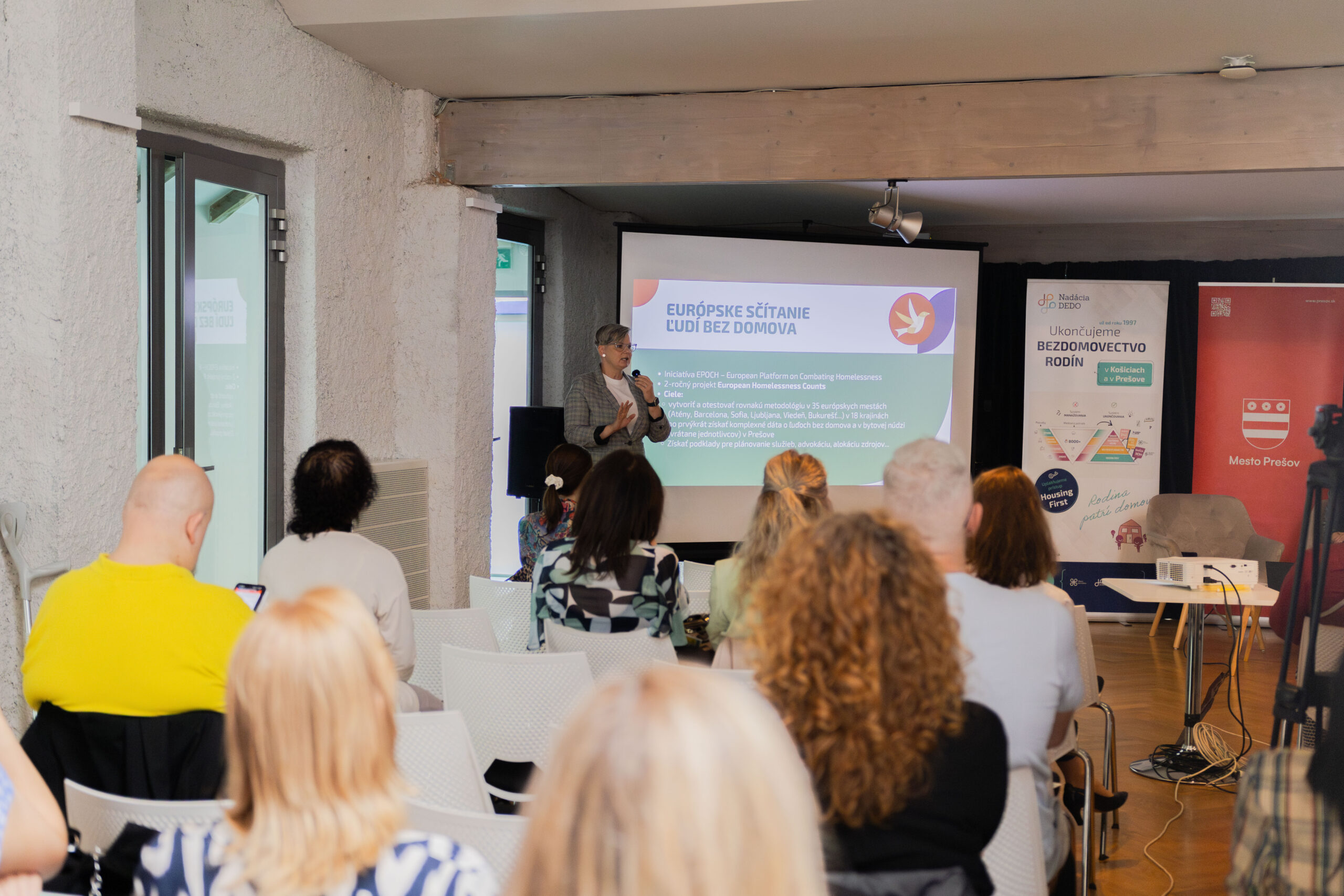
In June, together with the City of Prešov, we had the opportunity to present these results to service providers operating in the city, with the aim of jointly determining how to follow up on the data in practice.

According to the results, 801 people experiencing homelessness were identified in Prešov — though this represents only a minimum figure, as the survey was voluntary and could not fully capture hidden forms of homelessness.
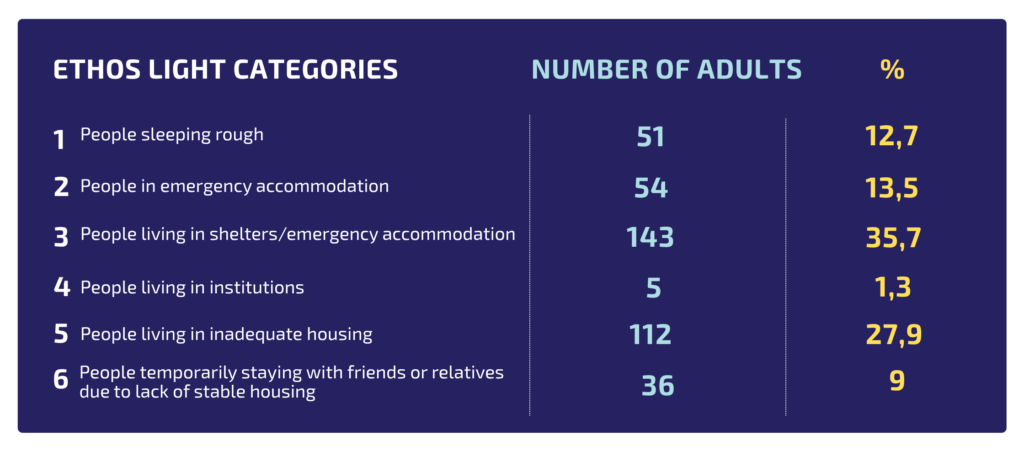
Homelessness in Prešov is predominantly long-term
The data also confirm that homelessness in Prešov is predominantly long-term rather than transitional: 84.9% of respondents have not had stable housing for more than a year, 61.8% for more than five years, and 35.9% have never had stable housing. Among those counted were also 267 minors, at least 160 of whom are growing up in a second generation of homelessness within their family.
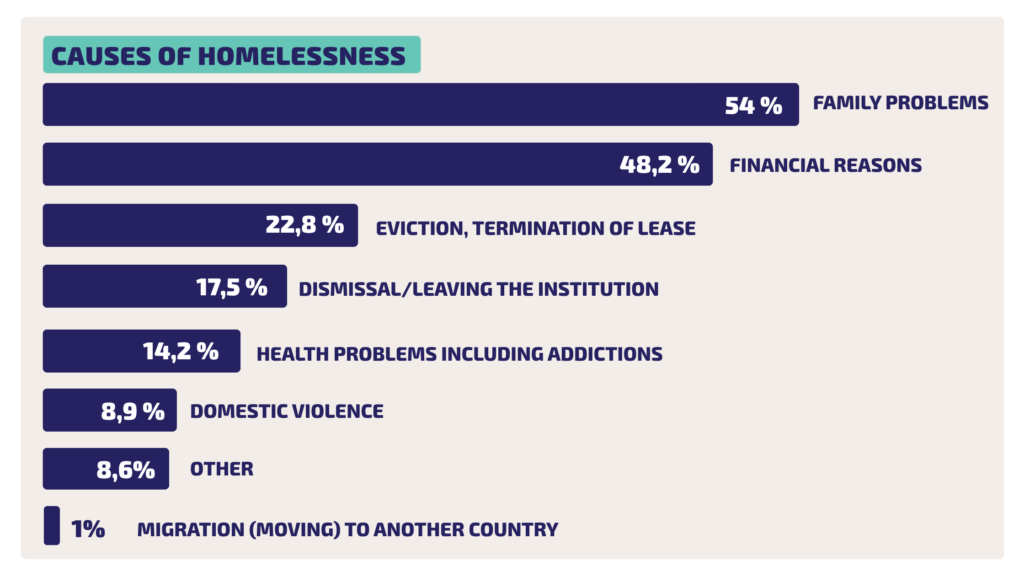
Most common causes of housing loss
Respondents most often cited family problems and financial reasons as the cause of losing their housing. Other frequent causes included eviction or termination of tenancy, leaving an institution, health problems, and domestic violence.
Homelessness and health
The count also revealed a strong link between homelessness and health. 44.6% of respondents reported at least one long-term health problem — whether physical or psychological, or pain or injury — that makes their daily functioning more difficult.
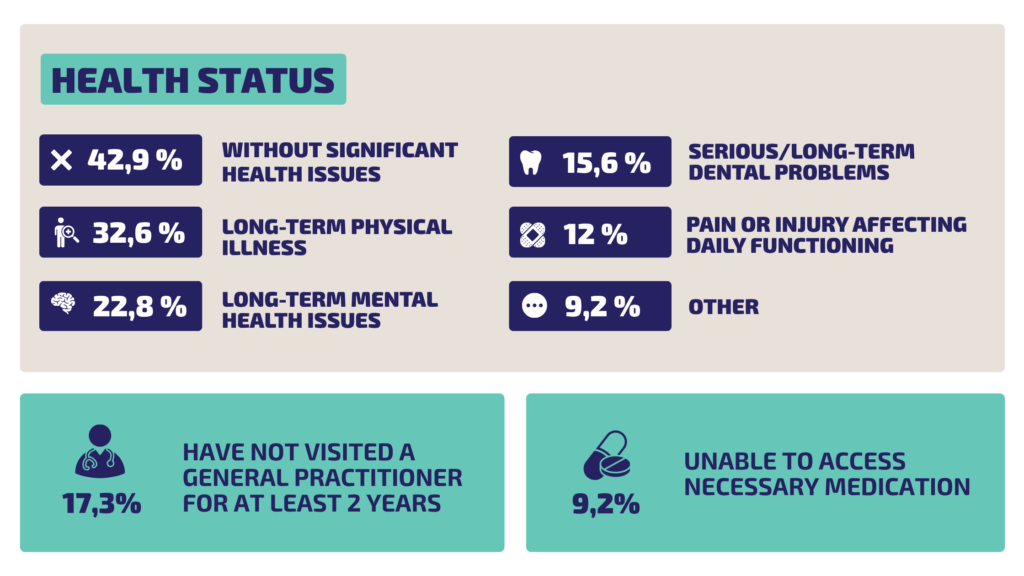
Almost a quarter of respondents also said they had no one to rely on in case of an emergency. The most vulnerable group are people sleeping rough, who are more likely to live alone, have poorer health, and have weaker contact with healthcare services.
The results show that the loss of housing is, in most cases, the result of a combination of several factors. It is therefore important that solutions do not focus only on crisis assistance, but also on preventing housing loss, increasing access to affordable housing, and supporting households in crisis situations.
We opened the HUB of Integrated health and social care in Prešov, as well as a similar HUB in Košice, as part of the SOLACE-CEE project, which develops integrated health and social care for people experiencing homelessness in Central and Eastern Europe. The data from the count help us better target this care where it is most needed — towards people who have been homeless long-term, families with children, and those facing health difficulties in addition to housing loss. The count is therefore not just a one-off survey, but a tool that directly shapes how we provide help in both Prešov and Košice.