
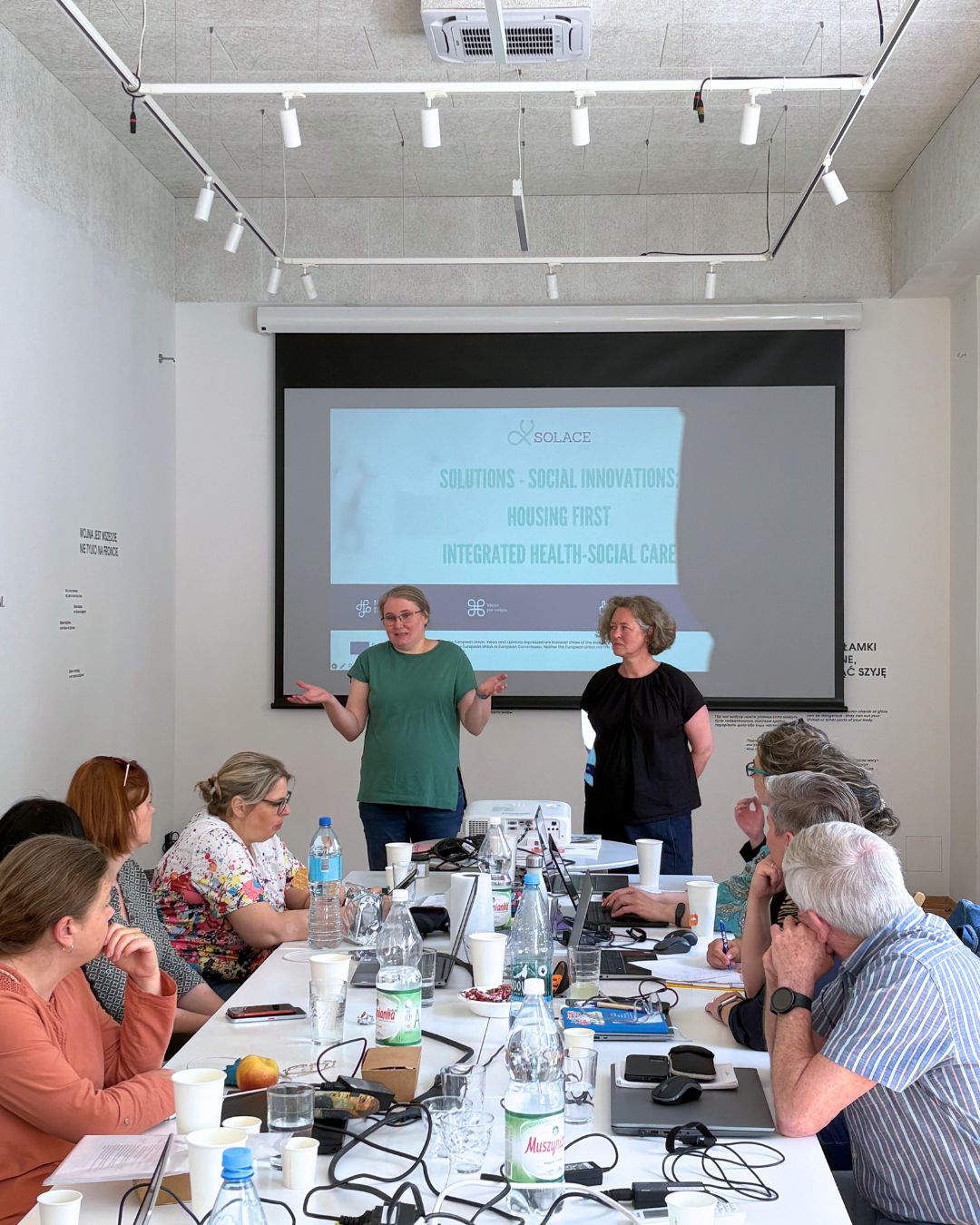
Late May took our project team to Warsaw. Three days full of meetings, presentations, and shared learning showed once again that cooperation across Central and Eastern Europe carries real strength.
Meeting in person
After months of working together remotely, the entire SOLACE-CEE consortium — DEDO, HESED, HFPF, Casa Ioana, HSCOM, MRI, and Všetci pre rodinu, n.o. — finally met in person. The meeting was hosted by the Housing First Poland Foundation at Duży Pokój, a space whose atmosphere practically invited open dialogue.
The agenda was packed:
- partners shared the current state of local hubs and innovations from their countries,
- reviewed the results of the project’s evaluation process so far,
- and reflected together on the next direction for the innovation team.
Just as important as the agenda itself was the room left for open discussion — for questions, mutual learning, and the kind of relationship-building that moves an international project like this one forward.
Inspiration straight from Polish practice
The Warsaw programme also included visits to organisations providing direct support to people experiencing homelessness in the city. Guided by the Street Medical Patrol. The Medical Street Patrol is a joint project of the Municipal Guard, Caritas Poland, and the We are Hope Association, serving as a response to the systemic gap in access to basic healthcare for people in a homelessness crisis. The MSP consists of mobile teams of municipal guards educated and qualified in emergency medical rescue. Thanks to this, the Patrol does not perform punitive functions, but instead brings specialized assistance to locations that traditional emergency services do not reach. Municipal guards treat wounds, ulcers, or frostbite, deliver clothing and food, and build a bridge of trust with deeply socially withdrawn individuals. A unique highlight of the meeting was the presence of the creator of the MSP initiative, Senior Inspector Alfred Paplak. Inspector Paplak, a veteran of the Municipal Guard decorated for his merits with the prestigious Jan Rodowicz “Anoda” Award, continues to redefine the role of uniformed services within the social assistance structure through his long-standing commitment to helping those excluded.
SOdON sobering-up centre
During the first visit to the Municipal Center for Intoxicated Persons (SOdON) at Kolska 2/4 Street led by the director of its Alcohol Binge Interruption Department, the participants were able to familiarize themselves with the organizational structure and functional evolution of the institution. Today, SOdON is not limited only to the Sobering-up Unit Department, but is a highly specialized intervention facility offering both paid and free care to its Patients and their families. The Center provides inpatient services, such as 24-hour medical supervision, detoxification, pharmacotherapy, and initial motivational interventions conducted by psychotherapists, as well as outpatient services – individual support groups for people with alcohol dependencies and their families. In addition, preventative and educational campaigns are also being conducted, for example guided tours of the Center or workshops raising awareness of the dangers of alcohol and promoting assertiveness with peer pressure for secondary school students.

According to data from the Municipal Guard, 7 374 people in a homelessness crisis were brought to SOdON in 2025, accounting for more than half of all admitted patients. People affected by the chronic homelessness crisis and severe alcohol addiction often fall into the so-called revolving door system, which involves returning to the Center up to several hundred times over the course of a year in the most severe cases.
We are Hope Clinic
The final destination of the site visit was the We are Hope Clinic at Stawki 27 Street, managed by Agnieszka Fill. The center is dedicated to providing medical, therapeutic, and material assistance to individuals who, due to a lack of health insurance, identity documents, or social stigmatization, remain outside the public National Health Fund (NFZ) system. In addition to meeting low-threshold and immediate needs, such as dressings, hygiene products, or clothing, the Clinic also provides, among others, free access to specialized neurological, cardiovascular, psychiatric, gynecological, dental, dermatological, endocrine, or orthopedic services.
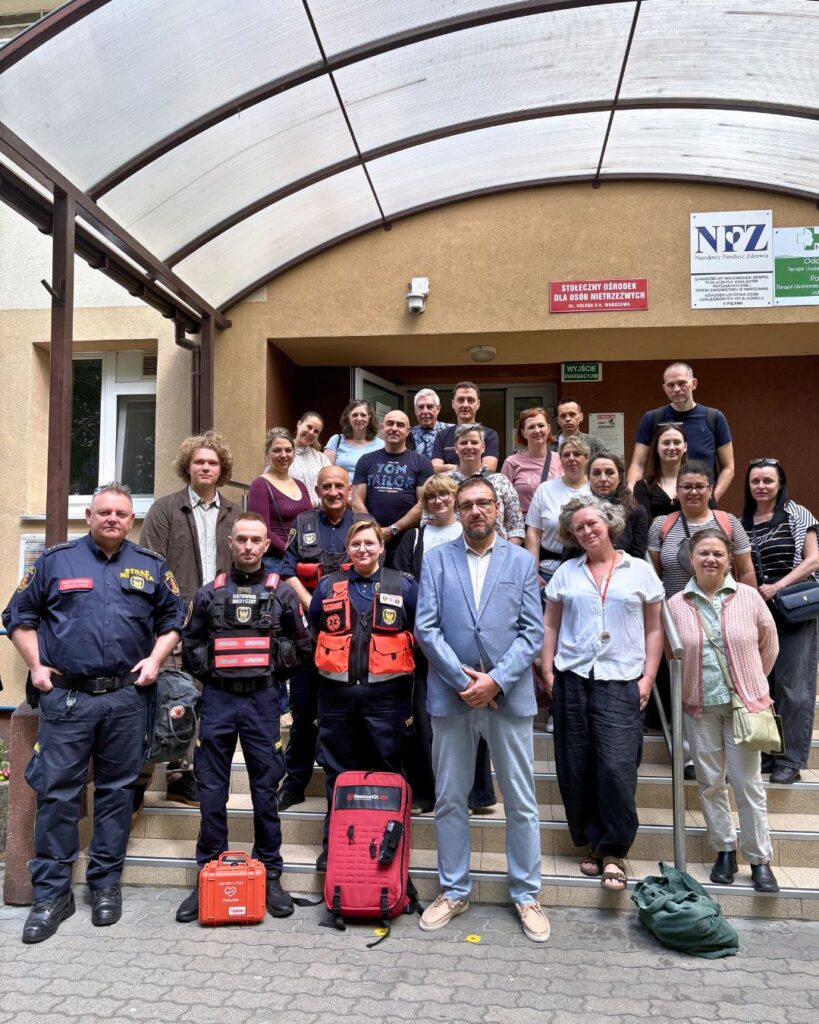
The SOLACE-CEE partner site visit demonstrated to the participants not only the operational structure of outpatient medical facilities, but also their essential role in the psychosomatic stabilization of patients at the pre-housing stage. Places such as SOdON and the We are Hope Clinic are so important because, for people in a homelessness crisis, they are often the only and primary point of contact with the assistance infrastructure. By being able to secure their basic health needs, those struggling with chronic homelessness can take the first step toward entering shelter or housing programs.
What the consortium takes home
Warsaw brought the SOLACE-CEE project new contacts, fresh inspiration, and concrete ideas that each partner will now bring back to their own country. Meeting the whole consortium in person confirmed once again that sharing experience between organisations from different CEE countries is one of the most powerful tools we have in this project.
By working together — across borders and across organisations — we can drive systemic change that genuinely helps people facing housing insecurity.