
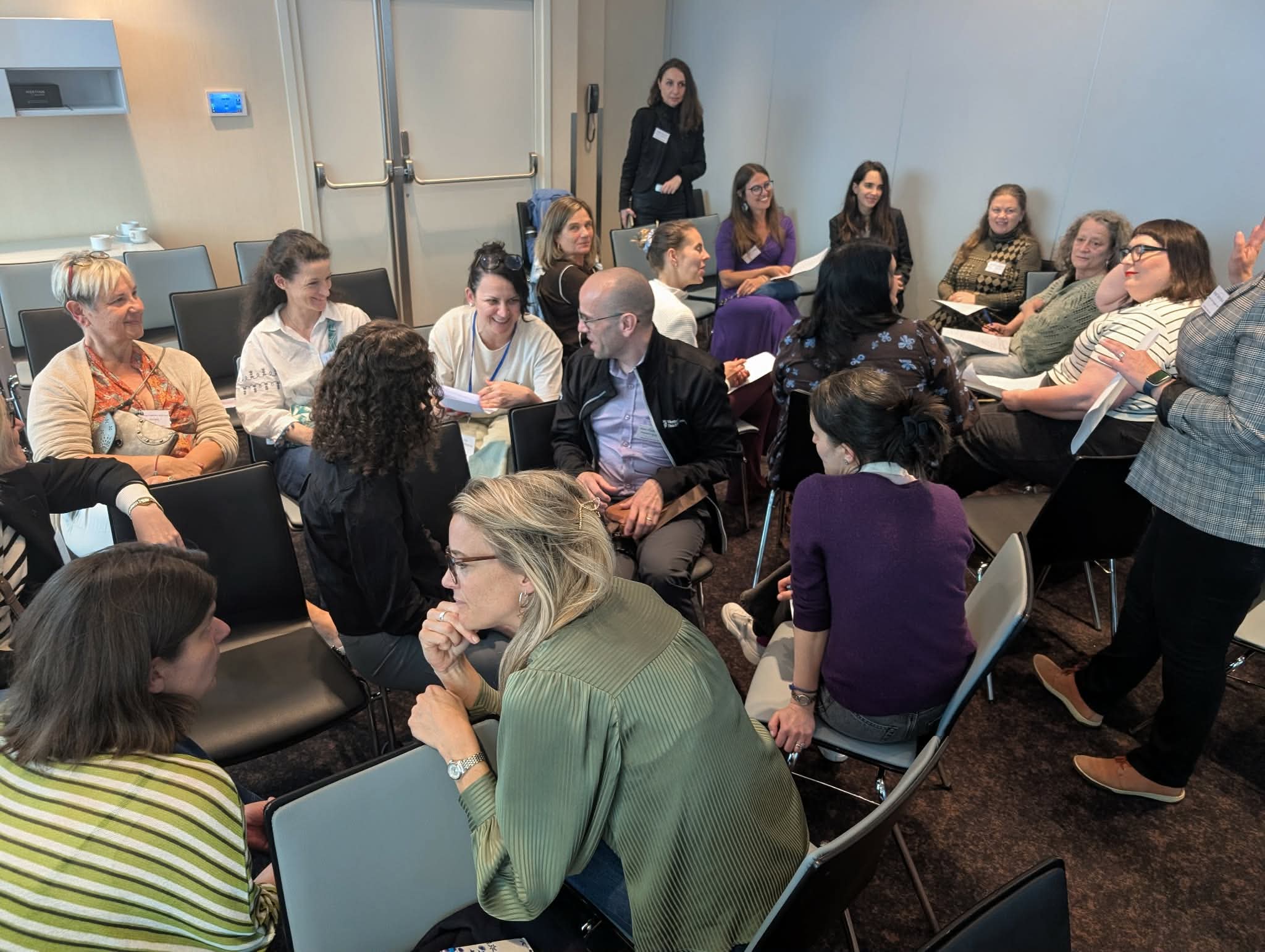
During the first day of the FEANTSA Forum, we had the opportunity to present the Solace-CEE partnership at the session “Connecting Health and Homelessness.”
FEANTSA presented its work on health and homelessness and made space for the Solace-CEE project, which addresses the strong need to connect healthcare and housing for people experiencing chronic homelessness. Within our session, we presented the partnership’s activities in the regions of Slovakia, Poland, and Bulgaria.
In Poland, the Housing First Foundation (Fundacja Najpierw Mieszkanie) runs the Ambivalence Program, which focuses on psychological support. Its activities are based on the values of Housing First and experience in social work, streetworking, motivational interviewing, and various psychotherapeutic approaches, such as psychodynamic and solution-focused therapy. The psychological support is mobile, and its foundation is a supportive relationship with participants, aiming to restore their agency in independently seeking help among available services.
In Bulgaria, the organization HESED operates and shared how they run their MIR center in the Fakulteta district, inhabited mainly by the Roma community. As part of the SOLACE-CEE project, free diagnostics and healthcare are organized. A playground, which supports children’s motor development, has also been opened. The organization combines social and health support through e.g. promoting conscious nutrition. As part of stabilizing living conditions, the organization teaches how to prepare simple nutritious meals, which are fundamental for children’s proper development.
In Slovakia, the SOLACE-CEE partnership leader, the DEDO Foundation, operates in cooperation with the VPR organization. Their goal is to open integrated health and social centers. The facility in Košice is already operating, offering services from a general practitioner, psychological and psychiatric consultations, and social, labour, and legal counseling. The facility in Prešov will also open soon. The multidisciplinary team of polyclinics will be able to support clients on various levels according to their individual needs.
Despite different regions, work contexts, and the diversity of needs of clinic clients and program participants, we are united by the common goal of the SOLACE-CEE project, which focuses on developing a model of integrated social & health services in the spirit of the higher goal of ending homelessness in the Central and Eastern European region.
Our experiences show that in building integrated services by expanding services, sudden changes often occur that require a rapid response from the partnership. During the session, we invited forum guests to share their experiences and ideas on how the system can react in three study cases:
- How do we design services and engage potential clients to use them? How do we react when clients stop trusting the service provider?
- How do we cooperate with the healthcare system? What do we do when the key doctor leaves their job?
- How do we ensure long-term funding and workforce in the spirit of a sustainable development strategy? What is our plan when significant political changes occur, additional resulting in a 40% budget reduction?
Each group presented its recommendations for implementing changes, along with the potential risk that may arise in the future.