
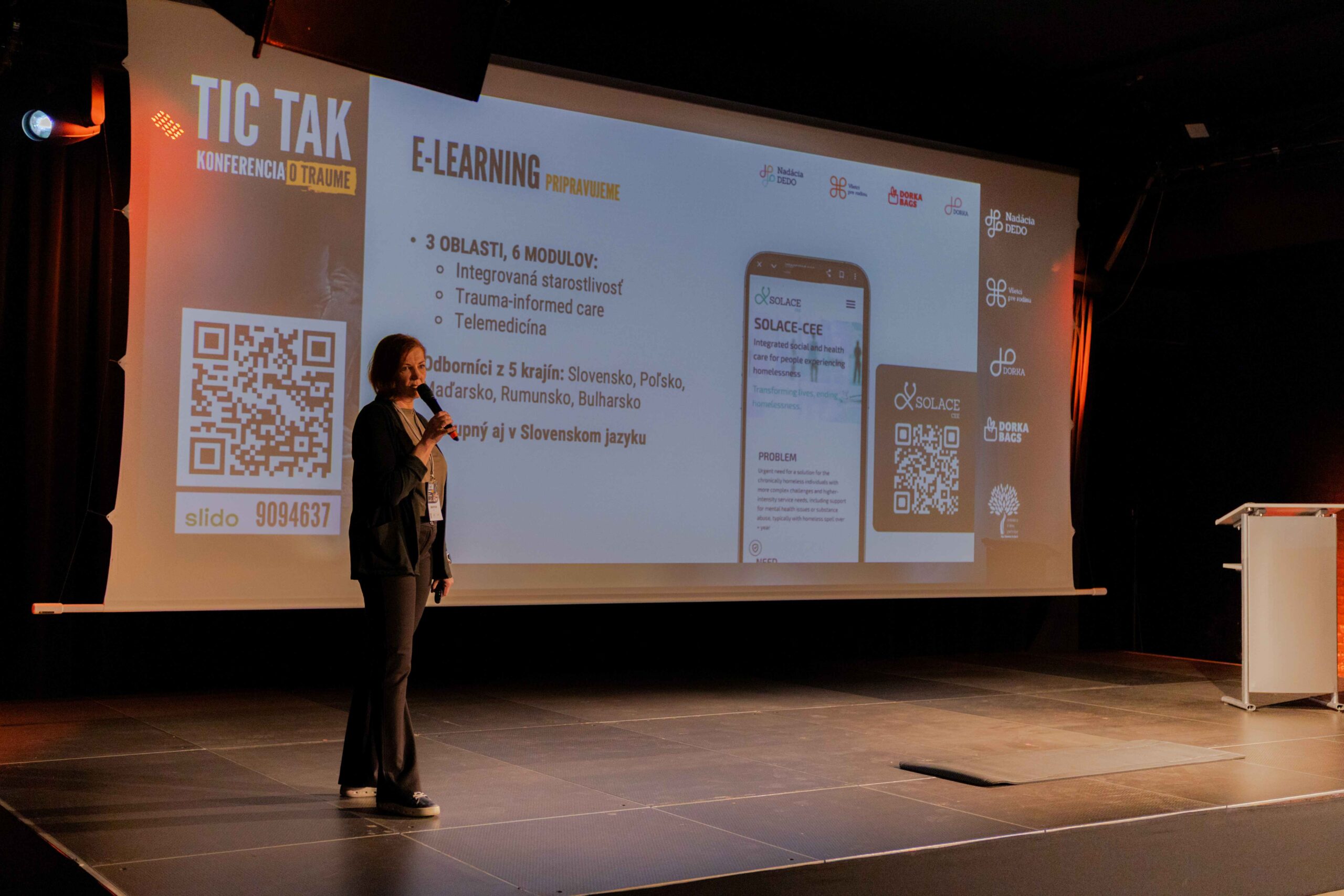
Trauma-Informed Care (TAK) Like Never Before (Conference claim)
The DEDO Foundation organised the second year of the TIC TAK Conference, focusing on stabilisation as the initial step in trauma-informed work. The conference also featured a presentation on the Centre for Integrated Health and Social Services in Košice and its first experiences with stabilising people from vulnerable groups.
TIC TAK Conference within the SOLACE-CEE Project Framework
The SOLACE-CEE project focuses on integrating social and health services for people with experience of homelessness, with Trauma-Informed Care being one of its key themes. In this context, the TIC TAK Conference created a space for sharing professional knowledge, practical experience, and concrete tools applicable in helping professions.
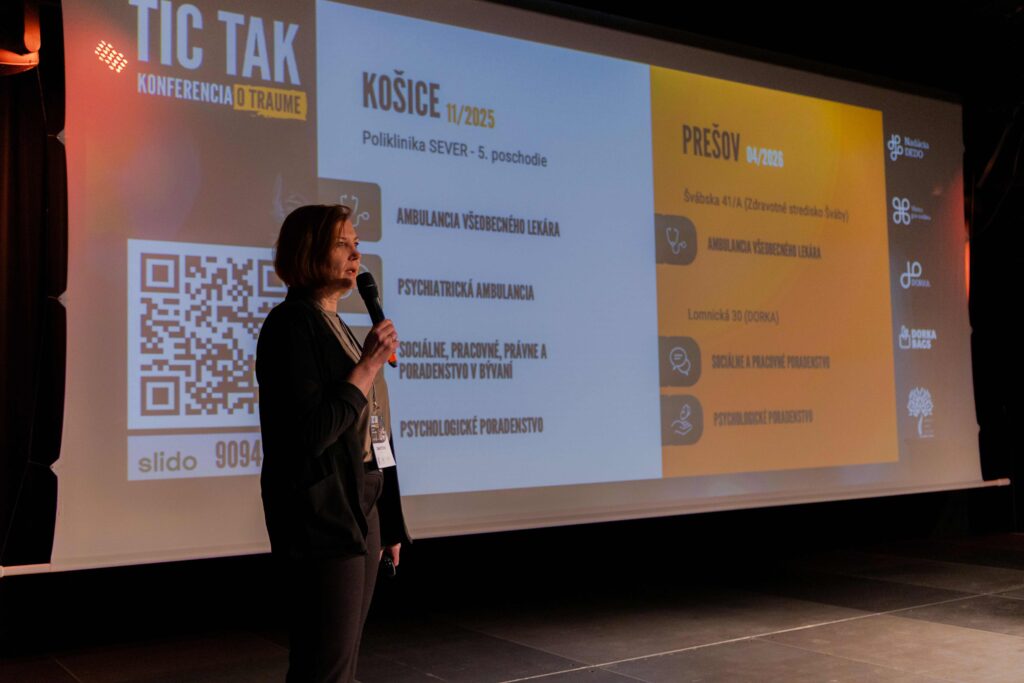
An important part of the programme was a presentation by the DEDO Foundation network (DEDO Foundation; Všetci pre rodinu, n.o. (VPR); Dorka Bags, n.o. and Dorka, n.o.), in which we introduced our first experiences with stabilising people experiencing homelessness at the Centre for Integrated Health and Social Services in Košice. This contribution highlighted the importance of stabilisation as a fundamental step when working with clients with complex needs.
From Theory to Practice: Stabilisation in Trauma-Informed Work
The conference also brought together different professional perspectives – from neurotherapy and trauma therapy to educational practice – and offered practical workshops focused on stabilisation techniques. The morning programme featured expert presentations on the importance of stabilisation in trauma-informed work, specific approaches applicable when working with children and adults, as well as current insights into brain functioning in the context of traumatic experiences. It also included the sharing of practical experiences from various settings, including education and services for people experiencing homelessness.
The afternoon programme was dedicated to experiential workshops, allowing participants to explore specific techniques such as breathing exercises, flash techniques, elements of bilateral stimulation, and approaches focused on safety in helping professions. The combination of theory and practice proved to be essential for transferring knowledge into everyday professional work.
From the perspective of the SOLACE-CEE project, the conference confirmed the need to further develop trauma-informed approaches as part of integrated services and highlighted the importance of stabilisation as their fundamental starting point.